

Research in Detail
The Fellowships at Norwich Research Park
Invest in ME Research funds two postdoctoral fellowships at the Quadram Institute Bioscience, Norwich Research Park - the Ian Gibson Fellowship, held by Dr Katharine Seton, and the LunaNova Fellowship, held by Dr Krishani Perera. Together they represent the operational core of the UK Centre of Excellence for ME. This page summarises the research each fellowship is currently generating.
The Ian Gibson Fellowship - Dr Katharine Seton
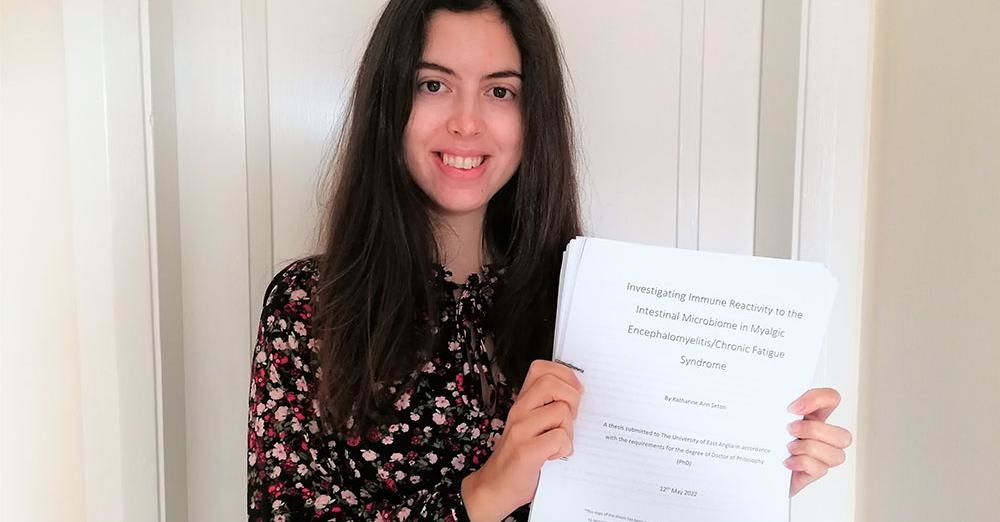
Dr Seton's research centres on the gut-immune axis in ME - specifically on whether changes to the intestinal microbiome drive oxidative stress and accelerate immune ageing in patients. Her work builds directly on her IiMER-funded PhD at the University of East Anglia and Quadram Institute.
She is also conducting the first study to directly assess whether microbiota replacement therapy can reduce oxidative stress - both intestinal and systemic - in people with ME, with the aim of identifying whether restoring gut microbial balance can improve immune function and reduce symptoms.
Dr Seton's profile at the Quadram Institute
Light ME Up - Red Light Therapy Pilot Study
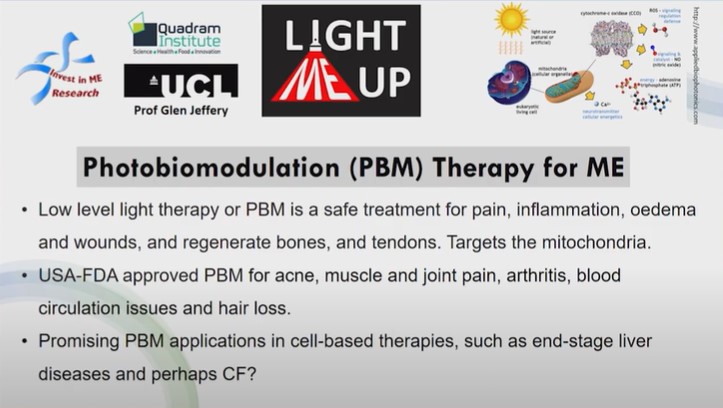
In April 2024, Dr Seton began a pilot study investigating whether red light therapy might benefit people with ME. Red light is absorbed by the mitochondria, where it may support energy production - an area of particular relevance given the metabolic dysfunction associated with ME.
Twenty-six participants took part in a nine-week home-based study, using a targeted single-wavelength red light device for two minutes each morning. The study was designed to be fully accessible to participants regardless of mobility or severity, with all assessments completed at home. Twenty participants completed the full study. Early findings showed the therapy was well tolerated and feasible. Analysis is ongoing, with results expected in late 2026.
Dr Seton presented preliminary findings at the Young EMERG Workshop in Vienna in November 2025, where she was awarded first place in the poster presentation competition.
SEE-ME - Retinal Biomarkers in ME

Dr Seton is co-leading SEE-ME, a new project selected for funding through the Quadram Institute Clinical Seedcorn Fund - a joint initiative between the Quadram Institute Bioscience and the Norfolk and Norwich Hospitals Charity, providing for collaborative clinical research. SEE-ME will investigate retinal biomarkers of visual disturbances in ME, in collaboration with NNUH consultant ophthalmologist Mr Colin Jones. This is a novel research direction and a further development of the ME research programme at Norwich Research Park.
RESTORE-ME Clinical Trial

RESTORE-ME is the UK's only clinical trial of its kind for ME - a phase IIb, randomised, placebo-controlled study of microbiota replacement therapy at the Quadram Institute, and one of the first ME trials to use objective outcome measures. It is funded entirely by Invest in ME Research.
Regulatory approvals for microbiota replacement therapy, which is classified as an investigational medicinal product by the MHRA, have taken considerable time to secure. The research team continues to work on related studies to optimise trial protocols alongside regulatory preparations. A patient and public involvement group formed for the trial continues to meet.
Further information: quadram.ac.uk
The LunaNova Fellowship - Dr Krishani Perera

Dr Perera joined Professor Simon Carding's laboratory at the Quadram Institute in July 2024. Her fellowship focuses on the gut-immune-brain axis and the search for biomarkers in ME, with links to the European ME Research Group and international partners. She brings a background in molecular virology, with postdoctoral experience in viral persistence and immune evasion - expertise directly relevant to ME's post-infectious mechanisms.
Dr Perera's profile at the Quadram Institute
Human Endogenous Retroviruses in ME - Published Review
Dr Perera is lead author on a review published in the International Journal of Molecular Sciences (May 2026), co-authored with Professor Elisa Oltra (Catholic University of Valencia) and Professor Simon Carding (Quadram Institute). The paper examines whether human endogenous retroviruses - ancient viral sequences making up approximately 8% of the human genome, ordinarily kept inactive - may be active contributors to the biological processes underlying ME.
The review identifies three mechanisms by which HERV reactivation could drive the immune dysfunction characteristic of ME: sustained immune activation, dysregulation of inflammatory gene networks, and self-reinforcing suppression failure. It draws on parallels with multiple sclerosis research, where one specific endogenous retrovirus has been extensively studied, and notes that the viruses known to trigger ME onset - including SARS-CoV-2, Epstein-Barr virus, and enteroviruses - are also known to reactivate HERVs.

The paper identifies HERV expression patterns as a candidate approach for developing diagnostic biomarkers for ME, and outlines potential therapeutic directions requiring clinical validation. The authors' stated aim is to move ME from a symptom-based syndrome to a mechanism-driven, biologically distinct condition amenable to targeted treatment.
Perera KD, Oltra E, Carding SR. Int. J. Mol. Sci. 2026, 27(10), 4309. Open Access.
COMPASS-ME - The Microbial Landscape of ME

Led by Dr Perera within Professor Carding's group, COMPASS-ME is funded by Invest in ME Research and based at the Quadram Institute. The study analyses mucosal microbial communities - viruses, bacteria, and fungi - in people with and without ME, using sampling methods chosen specifically to minimise burden on participants and ensure the study is accessible to those most severely affected.
The study addresses a persistent gap in ME research: no single pathogen has been definitively linked to the condition, and the broader microbial picture has remained poorly characterised. COMPASS-ME is designed to contribute over time to the development of diagnostic tools and to identify biological mechanisms that may be amenable to targeted treatment.
Further information: quadram.ac.uk
The Centre of Excellence for ME - The Case for Investment

The research infrastructure at Norwich Research Park was constructed over more than a decade through the sustained commitment of a volunteer-run charity and its supporters, and the dedication of a handful of researchers - without government funding, without research council backing, and without the institutional infrastructure that better-resourced disease areas take as given. Five PhD studentships. The first dedicated fellowships for ME research in the UK. The RESTORE-ME trial - a phase IIb, randomised, placebo-controlled study of microbiota replacement therapy, using objective outcome measures, funded entirely by Invest in ME Research. A programme of basic science, immunology, virology, and microbiome research embedded within one of Europe's leading gut biology institutes in one of Europe's most advanced research parks.
The Quadram Institute at Norwich Research Park houses one of Europe's largest endoscopy units, a clinical research facility,
and world-class expertise in mucosal immunology and gut biology. It sits within a park of over 3,000 scientists spanning genomics,
immunology, food science, and clinical medicine - one of the largest single-site concentrations of health research in Europe.
Alongside RESTORE-ME, the COMPASS-ME study is investigating the mucosal microbes of people with ME, and Dr Krishani Perera's
Luna Nova fellowship is examining the role of human endogenous retroviruses in immune ageing.
The platform for translational
biomedical ME research - the kind that moves between laboratory and clinic, generating findings that directly inform patient care -
already exists.
It was not created by a government initiative.
What sustained public investment in that platform could deliver is not difficult to imagine. Even a relatively small amount of funding - say, £4-5 million - could fund the expansion of the centre with multiple fellowships, PhD studentships, and early-career researcher positions needed to grow and sustain the programme over the long term. It could establish and expand the biobank and clinical database infrastructure that translational research requires. It could accelerate the work already underway on viral, fungal, and microbial contributions to ME. It could catalyse the European collaboration building on already established links and partnerships. It could, in short, transform a functioning research foundation - driven and funded over twenty years without government or research council support - into the properly resourced centre of excellence that patients need and the science is ready to deliver.
"The Centre at Norwich Research Park is not a proposal awaiting validation. It is a functioning reality that requires only the investment the establishment has thus far chosen to direct elsewhere."
The context for that case is sobering. Between 2015 and 2020, UK public research funding for ME totalled just £6 million -
compared to £53 million for Parkinson's disease and £22 million for multiple sclerosis, despite ME affecting comparable or
greater numbers of people. The economic cost of ME to the UK was estimated at £3.3 billion annually by the 2020health
Counting the Cost report - a figure based on 2014-15 data and a conservative prevalence estimate of 0.2% of the population,
which the report itself acknowledged could be as high as 0.7%. That estimate is now a decade old, and with prevalence substantially
revised upward and post-COVID case numbers having increased the affected population considerably, the economic burden will have
risen in proportion.
The case for directing serious, sustained investment towards research infrastructure that already exists, is
already producing results, and was built without the support it deserved is not complex.
It is simply overdue.
The Centre at Norwich Research Park is not a proposal awaiting validation.
It is a functioning reality that requires only the
investment the establishment has thus far chosen to direct elsewhere.
The fellowships currently funded by Invest in ME Research are the difference between this programme continuing and stalling. Every donation goes directly to keeping these researchers in the laboratory.
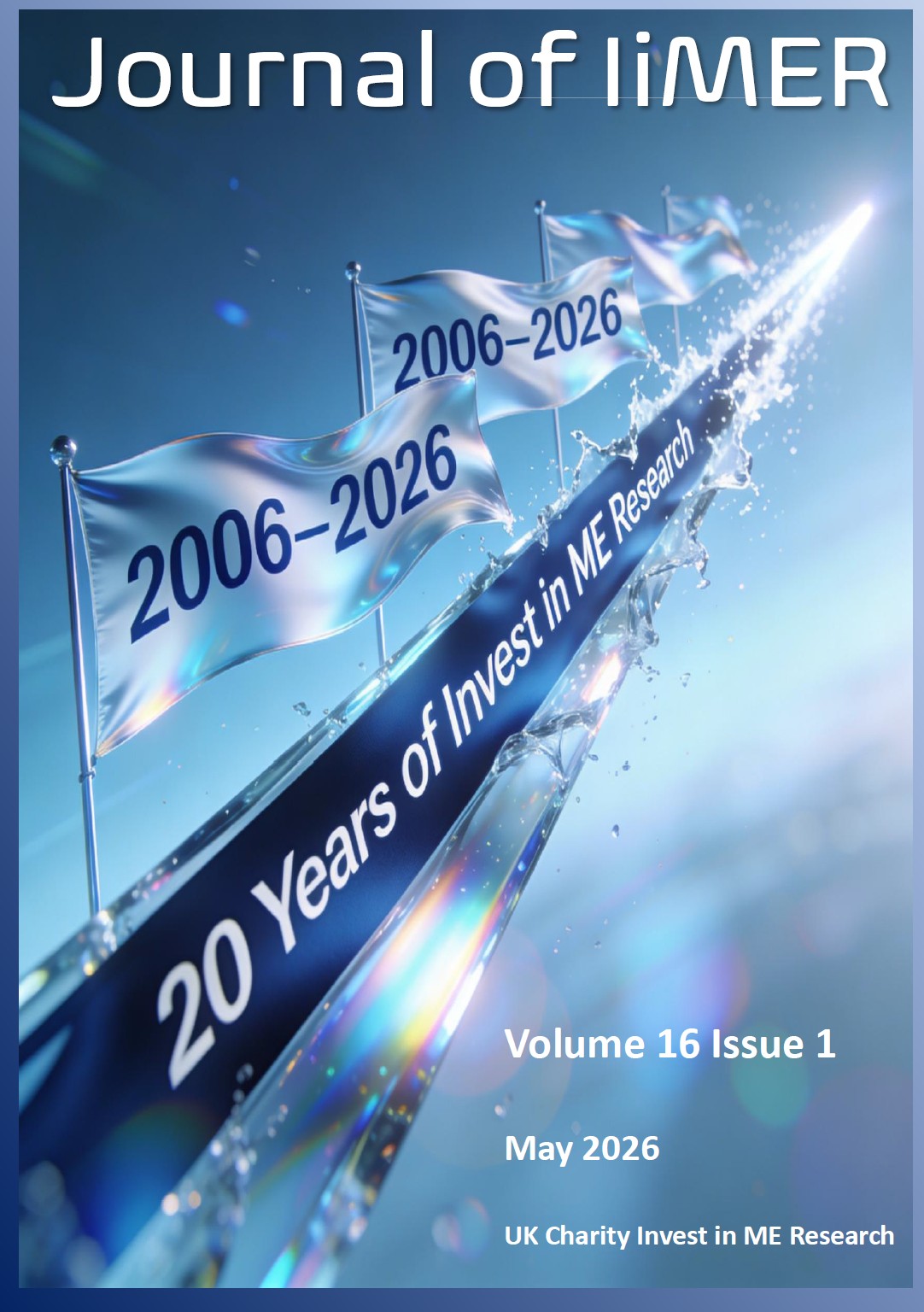
The research summarised on this page was reported in the Journal of IiMER, Vol 16 Issue 1.