

ADVOCACY
Advocacy and Action for Myalgic Encephalomyelitis
Since 2006, Invest in ME Research (IiMER) has undertaken sustained advocacy to improve recognition, research funding, and clinical care for people with Myalgic Encephalomyelitis. The charity has submitted evidence-based briefings and expert input to UK bodies including the Chief Medical Officer, DHSC, MRC, NHS and NICE, and engaged in parliamentary debates and the APPG for ME. IiMER has also contributed to international advocacy through the European ME Alliance and engagement with the NIH.
The charity and supporters have raised over £2.3 million to fund biomedical research and collaborative initiatives. As of January 2025, this included funding the only clinical trial for ME in the UK, alongside fellowships and PhD projects dedicated to ME research.


Advocacy Based on Principles
Policymaking
Invest in ME Research produces evidence-based responses and submissions to UK government bodies including UKRI, DHSC, NICE, CMO, and MRC to influence decision-making for the benefit of people with ME and their families.
These submissions provide detailed scientific critiques of current ME policies, highlighting failures in diagnosis, treatment, and research allocation. IiMER submissions reference peer-reviewed biomedical evidence, clinical data from international ME conferences, and patient outcomes to demonstrate the urgent need for paradigm change.
IiMER submissions challenge outdated or flawed guidelines and treatments, making it more difficult for the establishment and mainstream charities to maintain the status quo. Ongoing responses ensure biomedical priorities remain central to ME policy development for patients.
Links
- 2005 - Parliamentary Submissions
UK Parliament
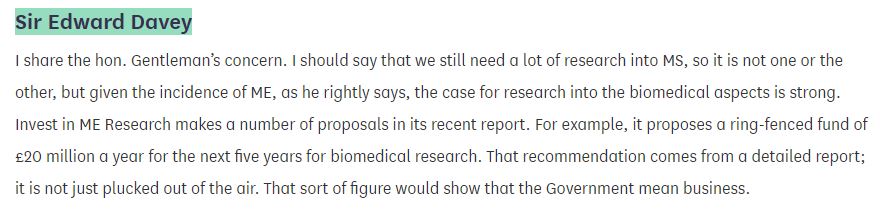
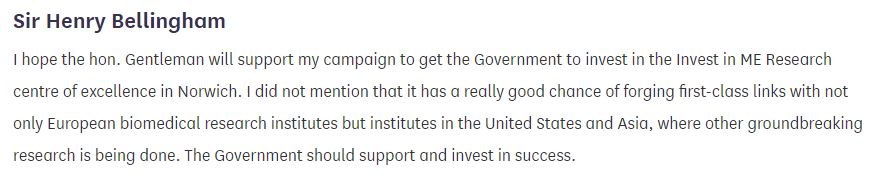
Invest in ME Research has engaged on an ongoing basis with the All-Party Parliamentary Group (APPG) for ME and with parliamentary processes to ensure that patient experience and biomedical evidence are represented in policy discussions. This engagement seeks to challenge longstanding institutional neglect of ME and to counter the narrow perspectives that have often dominated official debate.
APPG meetings provide an important forum for MPs to discuss ME-related issues and for the patient community to raise awareness and inform policy. While Invest in ME Research has not always been able to attend meetings in person, the charity has consistently submitted evidence-based written contributions for consideration by the APPG.
Prior to one of its international ME conferences, Invest in ME Research arranged a dedicated APPG meeting in Parliament. As one of its early actions on joining the APPG, the charity worked with then Chair Annette Brooke to organise a meeting between MPs and biomedical researchers attending the #IiMEC6 conference. This enabled direct engagement between parliamentarians and researchers, allowing current scientific evidence to inform policy discussions.
Since the Covid pandemic, participation in APPG meetings has become more restricted, reducing opportunities for alternative and independent perspectives. Despite these limitations, Invest in ME Research continues to submit evidence to APPG meetings, provide briefings for parliamentary debates, and contribute proposals to government initiatives, including the recent DHSC Delivery Plan.




Counteracting Outdated Practices
Invest in ME Research has consistently challenged outdated and harmful practices in the understanding and management of Myalgic Encephalomyelitis. Central to this has been detailed critiques of the biopsychosocial (BPS) model and its application through the PACE Trial, including critique of its methodology, outcome switching, and the lack of demonstrated efficacy. The charity has also highlighted patient-reported harms associated with the promotion of graded exercise therapy (GET) and the inappropriate framing of cognitive behavioural therapy (CBT) as a treatment for ME, often implemented against the wishes of patients and carers.
IiMER’s advocacy has examined PACE Trial data handling, documented harms arising from GET, and scrutinised the 2007 NICE guideline, including concerns regarding conflicts of interest and the exclusion of biomedical evidence. These analyses have been submitted to relevant bodies and made publicly available to support informed debate and clinical education.
Beyond clinical guidance, Invest in ME Research has challenged broader policy failures, including blood donation bans affecting people with ME, school attendance policies rooted in psychosocial assumptions, and research funding priorities that have favoured psychological interventions while neglecting biomedical investigation. The charity has repeatedly written to the Medical Research Council, NICE, and UK Chief Medical Officers, and organised meetings involving CMOs, researchers, policymakers, and patient representatives to address these issues directly.
To support professionals, patients, and carers, Invest in ME Research has published numerous articles and analyses through its online library, providing accessible evidence-based resources that document past failures and promote more appropriate approaches to ME.
Links
- 2005 - NICE Guideline Submissions
- 2018 - PACE Trial Analysis
- 2018 - Articles and Evidence Library
- 2005 - Campaigning and Advocacy
- 2022 - BPS Critique

European & International Advocacy
As a founding member of the European ME Alliance (EMEA), Invest in ME Research has contributed to the coordination of ME advocacy across Europe and to the submission of evidence to international bodies, including the National Institutes of Health (NIH), as part of joint international responses addressing ME research priorities and policy direction.
Through its involvement in EMEA, the charity has organised and supported webinars and collaborative initiatives examining clinical guideline development in Nordic countries, health policies and service provision in Balkan states, and broader European approaches to ME. These activities have brought together policymakers, researchers, clinicians, and industry representatives to support more coherent and effective progress on ME across Europe.
Invest in ME Research also amplifies UK patient perspectives through European ME Alliance submissions to EU-level health bodies and participates in transatlantic advocacy aimed at promoting harmonised biomedical research standards and clinical guidance.
In parallel, evidence sessions held alongside international ME conferences provide policymakers with access to current global biomedical research, while EMEA coordination helps maintain consistent, evidence-based messaging across Europe. Through this work, Invest in ME Research links UK policy engagement with international research developments in ME.
Links
- 2005 - European ME Alliance (EMEA)
- 2018 - European Research Networks
- 2015 - NIH
- 2005 - Letter to Finland's Valvira

Research, Evidence, Advocacy and the Way Forward
Structural Challenges Remain
Despite growing recognition of the biomedical nature of Myalgic Encephalomyelitis, many of the structural problems affecting patients remain unresolved. Inadequate clinical services, inconsistent guidance, and limited investment in biomedical research continue to shape outcomes for people with ME across the UK and internationally.
Evidence-Based Advocacy
Invest in ME Research’s advocacy is grounded in evidence, patient experience, and engagement with policymakers, clinicians, and researchers. Whether through parliamentary briefings, submissions to national and international bodies, or collaboration with European partners, the charity has sought to ensure that decisions affecting people with ME are informed by robust science rather than outdated assumptions, and guided by the urgency this illness demands, recognising that progress requires more than preserving existing frameworks or yielding to organisational inertia.
Continuing the Push for Change
Progress has been made, but it has been slow and uneven. Invest in ME Research continues to combine advocacy with direct investment in biomedical research, recognising that lasting change depends on evidence that can no longer be ignored. The charity remains committed to pressing for policies, clinical practice, and research funding that reflect the seriousness of ME and the needs of those affected.

Direct Ways to Donate to Invest in ME Research
There are several options to support the charity via direct methods such as bank transfer and direct donations.
Click the donate button to go to the funding page for more details.